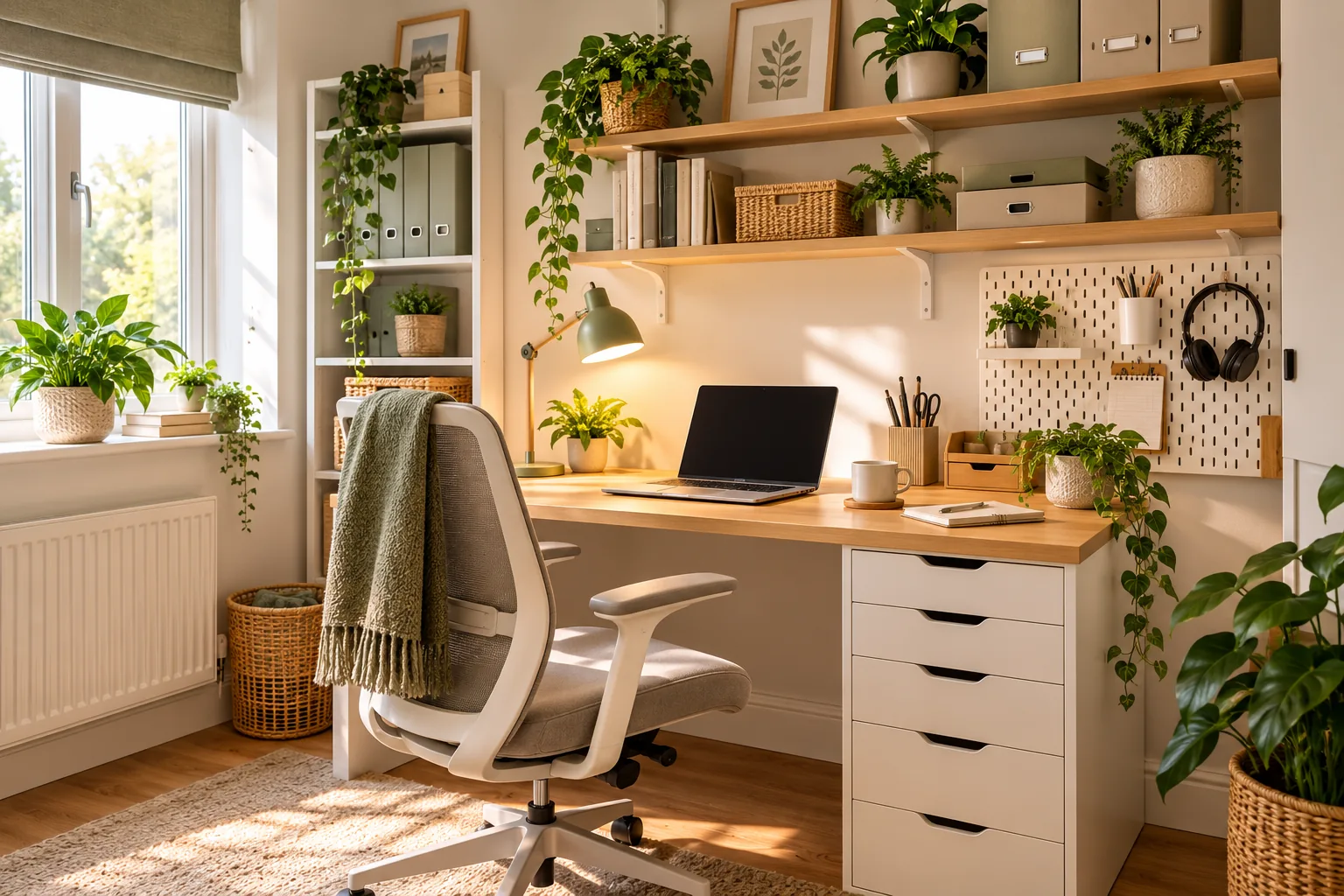
How to Organise a Small Home Office and Make the Most of Your Space
A small home office doesn’t necessarily need more storage. Often, the best place to start is by making better use of the space you already have.
Whether you work from a dedicated box room, a corner of a bedroom or simply have a desk squeezed into another part of the house, clutter can quickly make a small workspace feel even smaller. Papers accumulate, cables spread across the floor and the desk gradually becomes somewhere to store things rather than somewhere to work.
The good news is that a few simple changes can make a surprisingly big difference. Before buying more furniture or organisers, try these practical ways to create a calmer, more useful workspace.
1. Start with what actually needs to be there
Before reorganising your office, take everything out that doesn’t really need to live there.
It can help to divide things into three simple groups: items you use regularly, things you need occasionally and things you rarely use. Everyday essentials deserve the easiest-to-reach spaces, while occasional items can be stored higher up, further away or even elsewhere in the house.
Be particularly ruthless with old paperwork, empty packaging, obsolete cables and stationery you’ve accumulated over the years.
The aim isn’t to create a completely empty office. It’s to make sure the limited space is being used by things that actually help you work.
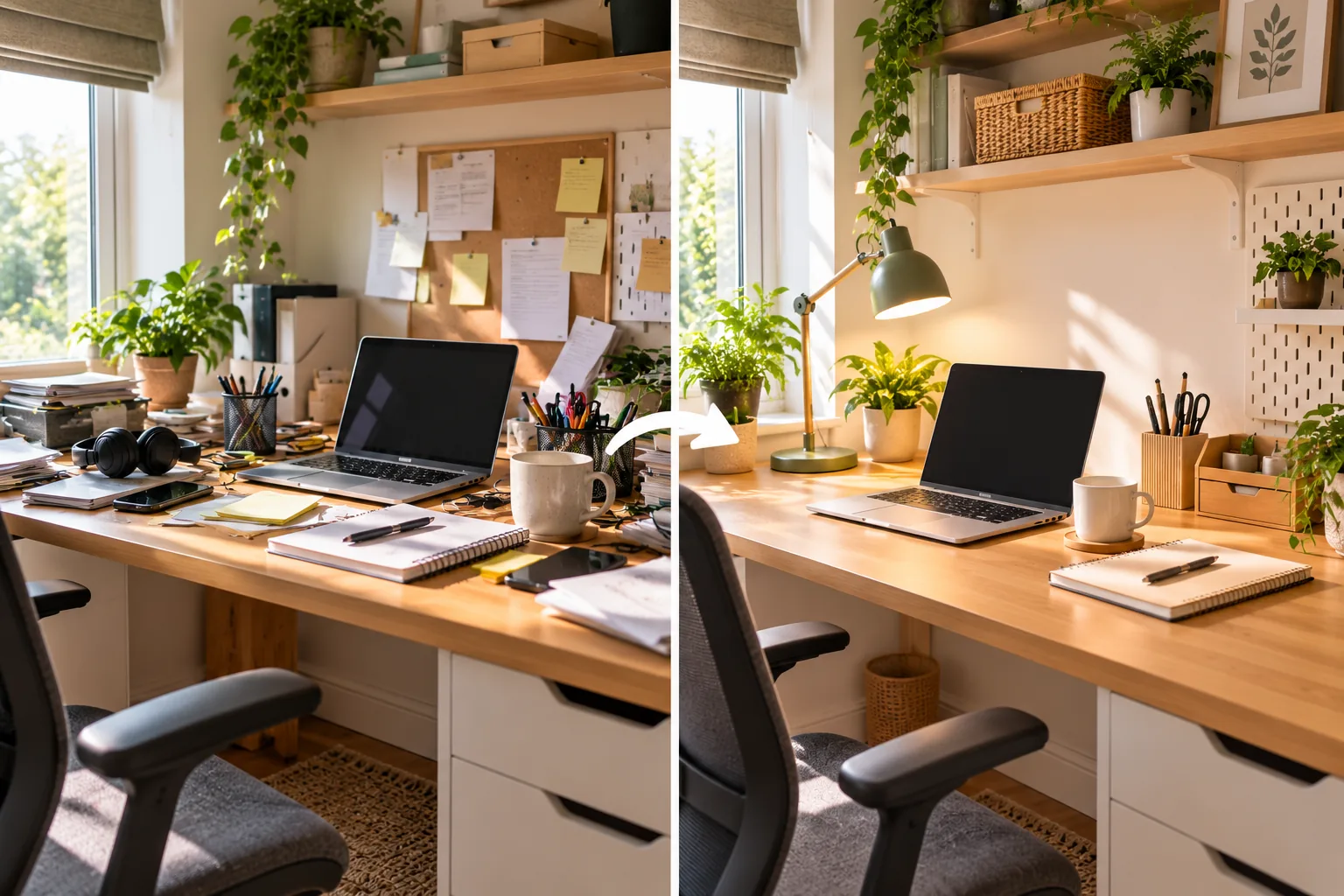
2. Give your desk some breathing room
In a small office, the desk can easily become the default home for everything.
Try treating it primarily as a working surface instead.
Keep the things you genuinely use throughout the day within easy reach — perhaps your computer, notebook, pen and a desk lamp — and find another home for everything else.
A clearer desk doesn’t just make the room look tidier. It gives you more usable space and makes it much easier to sit down and get started without having to move yesterday’s clutter first.
3. Look upwards for extra storage
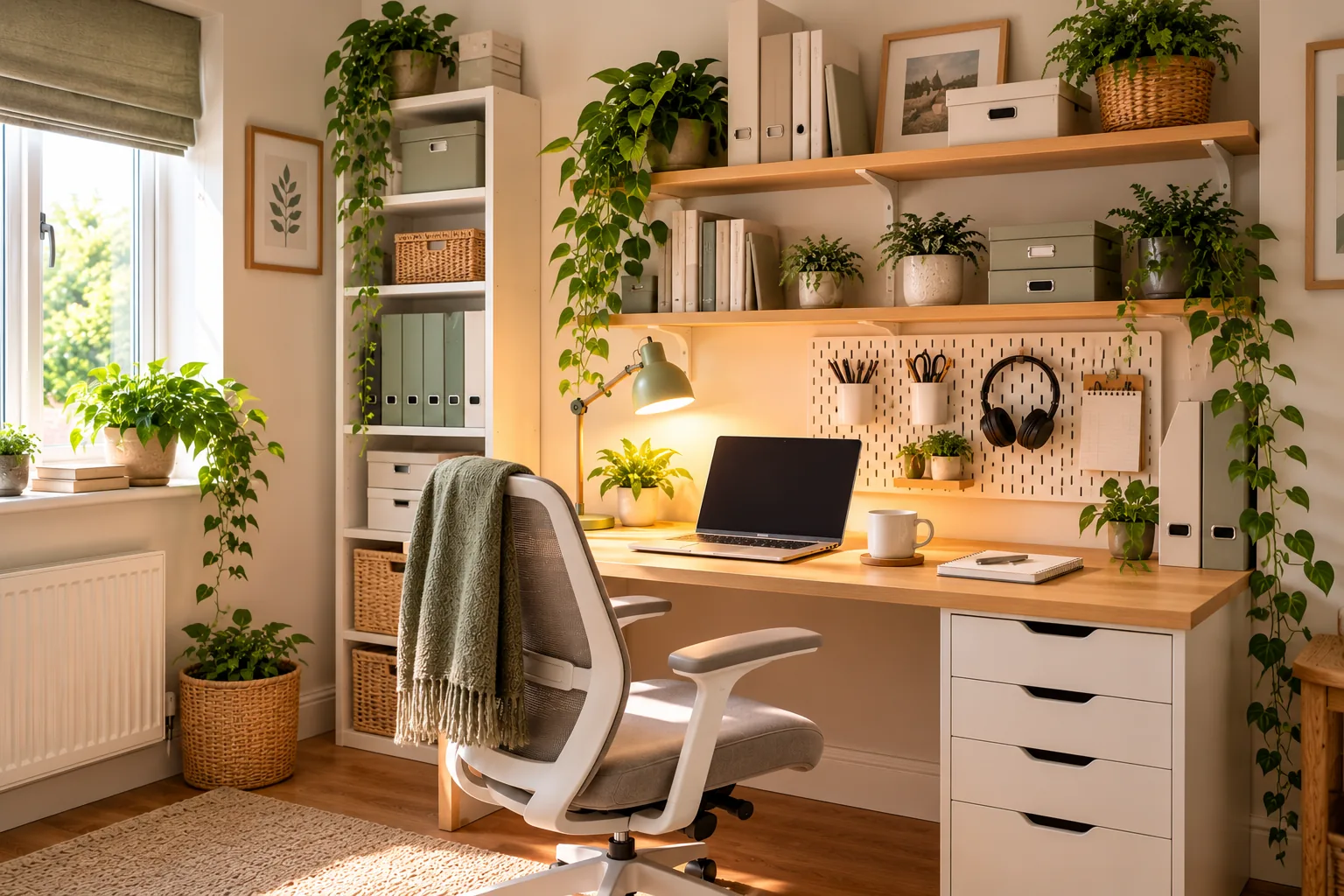
When floor space is limited, walls can provide some of the most useful storage in the room.
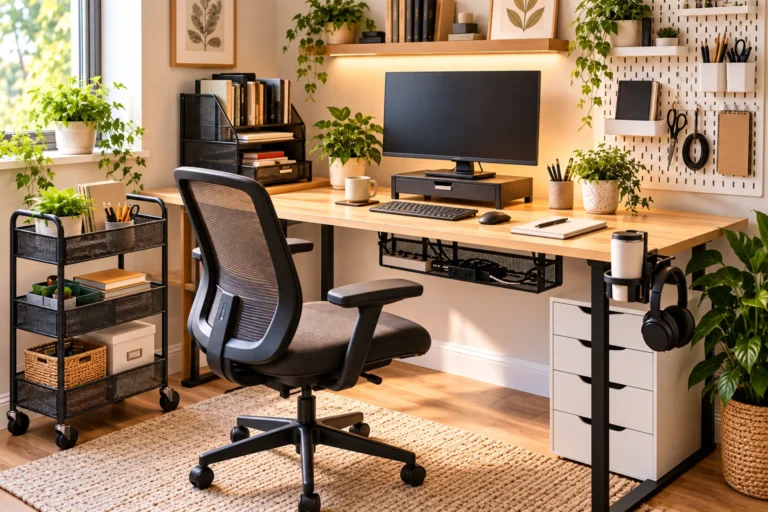
The area above a desk is often overlooked. Shelves can provide somewhere for books, folders and less frequently used items without taking up any additional floor space.
Wall-mounted organisers can also work well for lightweight everyday items.
You don’t need to cover every available wall, though. Leaving some open space helps prevent a small office from feeling boxed in. The goal is to use vertical space intelligently rather than simply filling it.
4. Make better use of the space under your desk
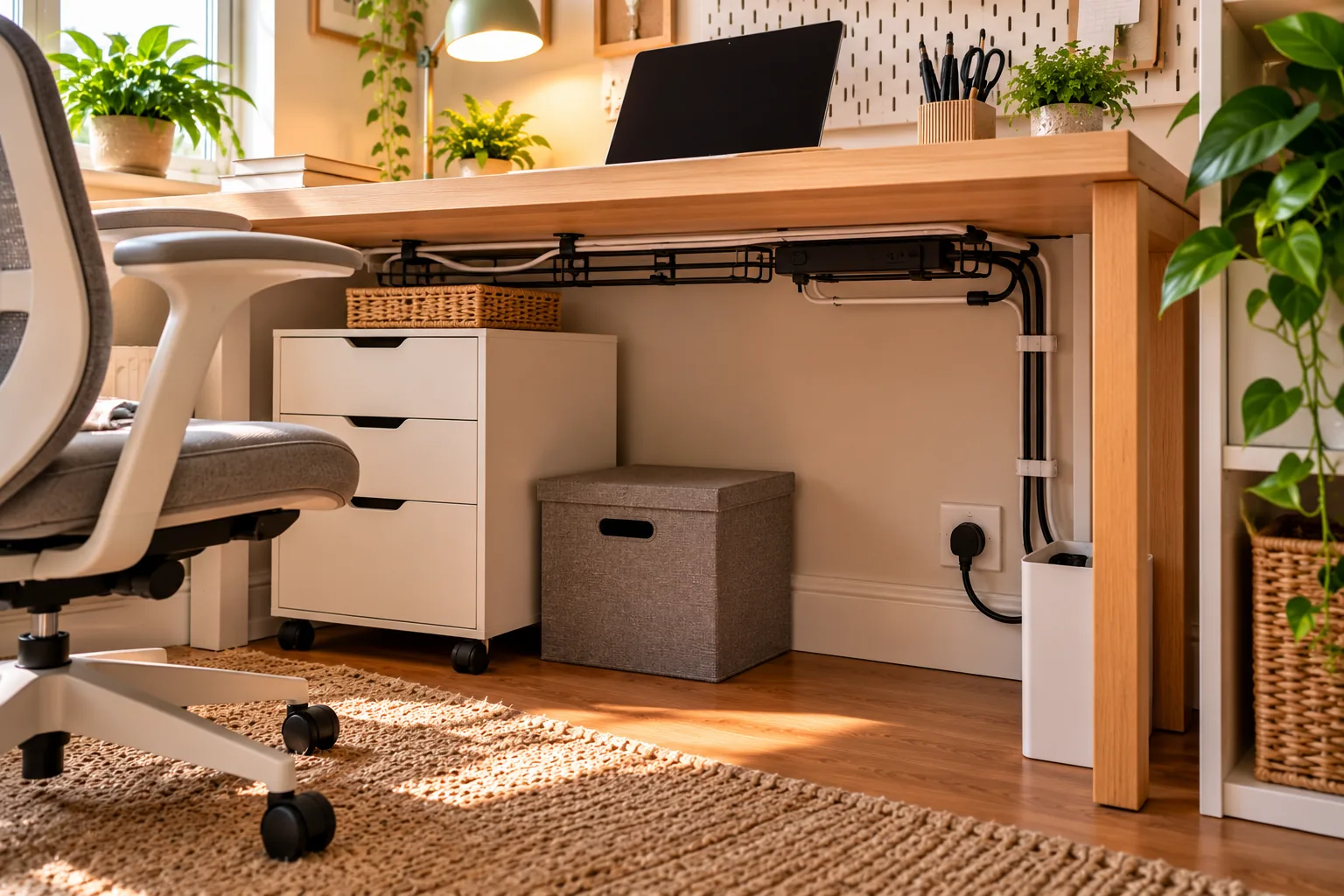
The area beneath a desk can offer useful storage, particularly if you don’t have room for another piece of furniture.
A compact drawer unit, small filing system or neatly arranged box can make use of space that might otherwise go unused.
But there’s an important trade-off: don’t sacrifice comfortable legroom just to squeeze in more storage.
If you’re constantly kicking a drawer unit or twisting your legs around boxes, the extra storage probably isn’t worth it.
Use the edges and less useful areas beneath the desk first, while keeping the main sitting area clear.
5. Give paperwork one proper home
Paper has an impressive ability to spread across every available flat surface.
Instead of keeping several piles around the office, create one place for paperwork that needs your attention and another for documents that genuinely need to be kept.
A simple incoming tray can stop unopened letters, forms and notes from taking over your desk. Set aside a little time regularly to empty it rather than allowing the tray itself to become another permanent pile.
It’s also worth asking whether everything you’re filing really needs to be kept on paper. Digitising suitable documents can gradually reduce the amount of physical storage you need.
6. Get cables under control
Cable clutter can make an otherwise tidy office look surprisingly chaotic.
Start by checking what’s actually connected. You may discover old chargers, duplicate cables or accessories that no longer need to be there.
Then try routing the cables you do need together and, where possible, behind or underneath the desk rather than across the working surface or floor.
Power leads can often stay in one place, while chargers for occasionally used devices can be stored away until they’re needed.
You don’t need every cable to become completely invisible. Simply getting them off the desk and stopping them from sprawling across the floor can make the whole workspace feel more organised.
7. Use the awkward spaces
Small rooms often contain useful areas that aren’t immediately obvious.
Look at corners, alcoves, narrow gaps beside furniture and the space above existing storage. Even the back of a door may provide useful organising space in the right room.
The important thing is to start with the available space rather than the storage product.
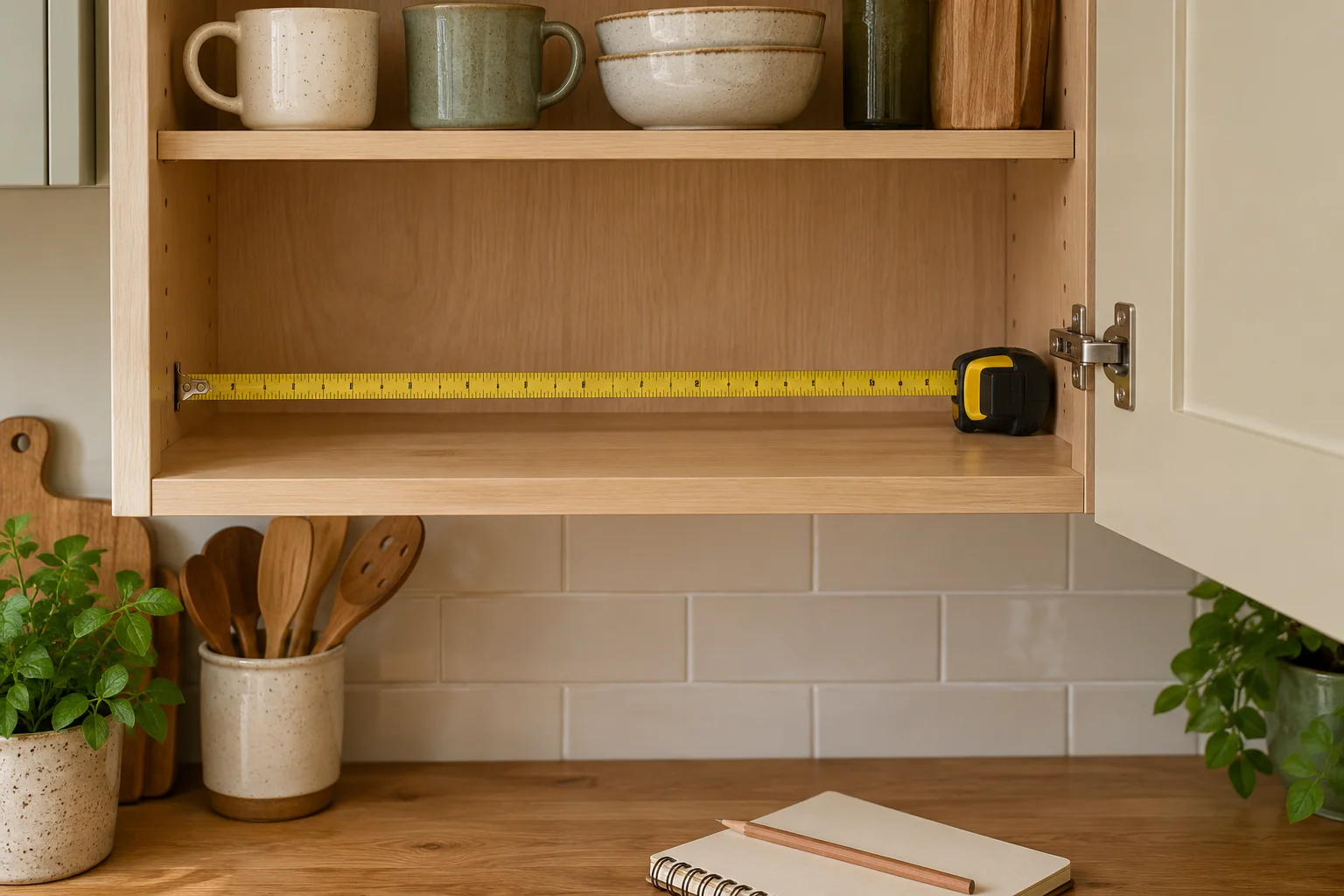
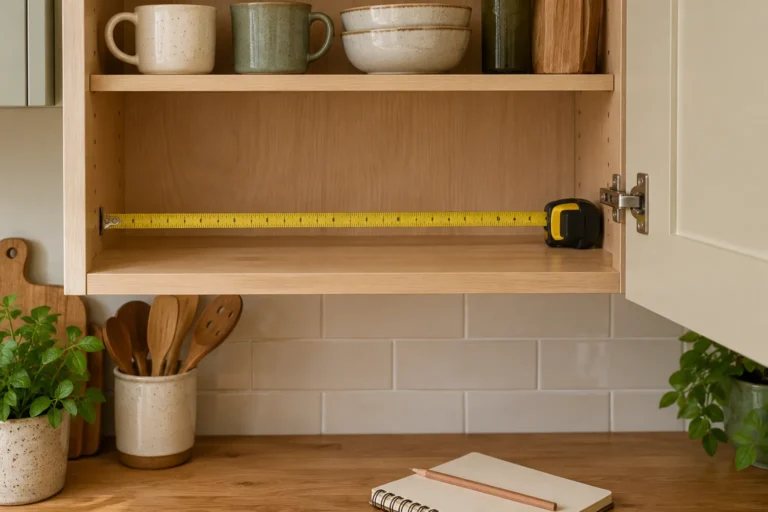
Measure the area first and think about what would genuinely be useful there. Our measuring guide helps you check awkward gaps, clearances and obstructions before choosing storage. Buying an organiser and then searching for somewhere to put it is an excellent way to accidentally create more clutter.
8. Make your office easy to reset
The best organising system isn’t necessarily the cleverest one. It’s the one that’s easy enough to keep using.
Try to give frequently used items obvious homes close to where you use them. If putting something away involves opening three boxes and moving another pile first, there’s a good chance it’ll end up staying on the desk.
At the end of the working day, spend a couple of minutes returning things to their places, clearing cups and paperwork and preparing the desk for the next day.
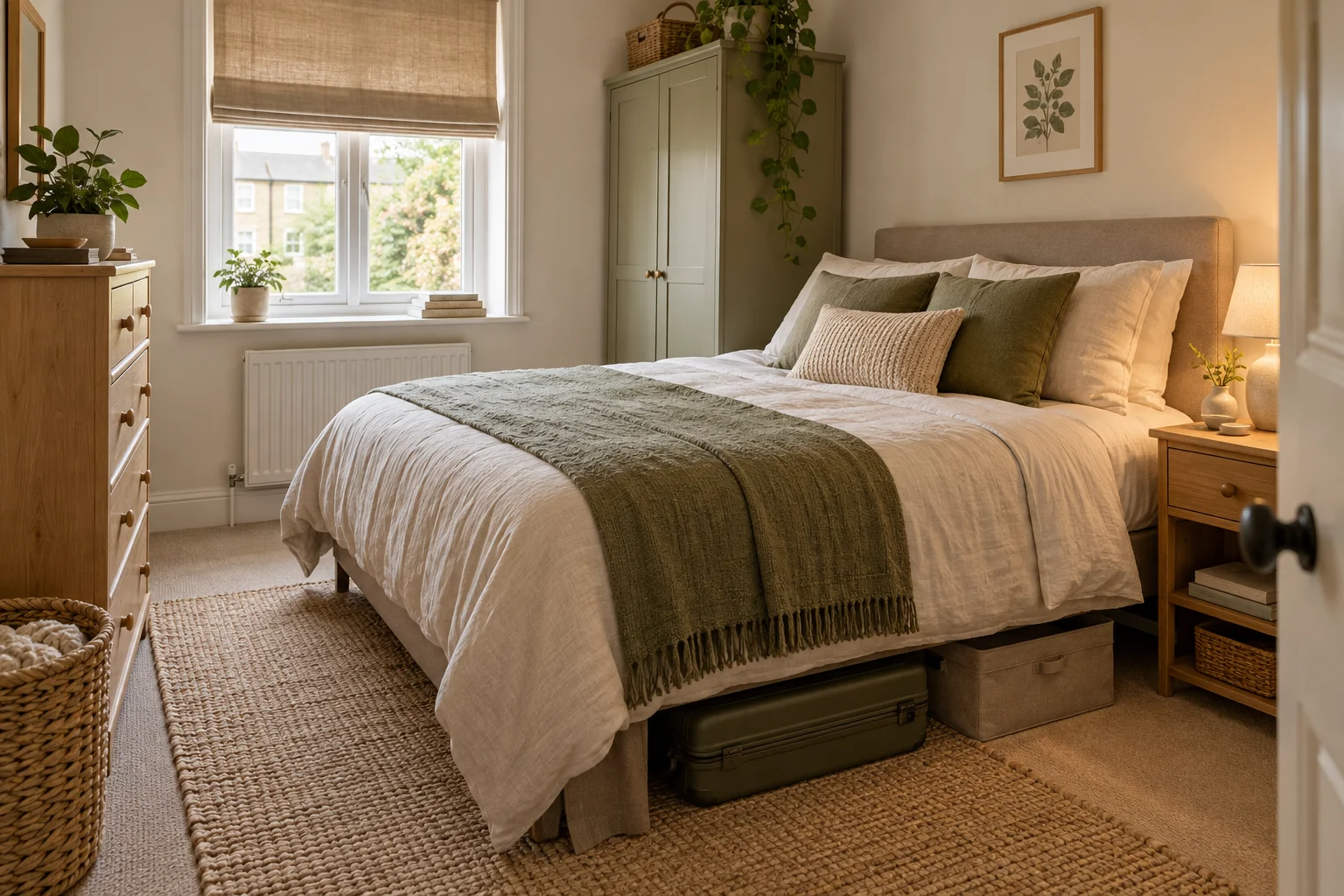
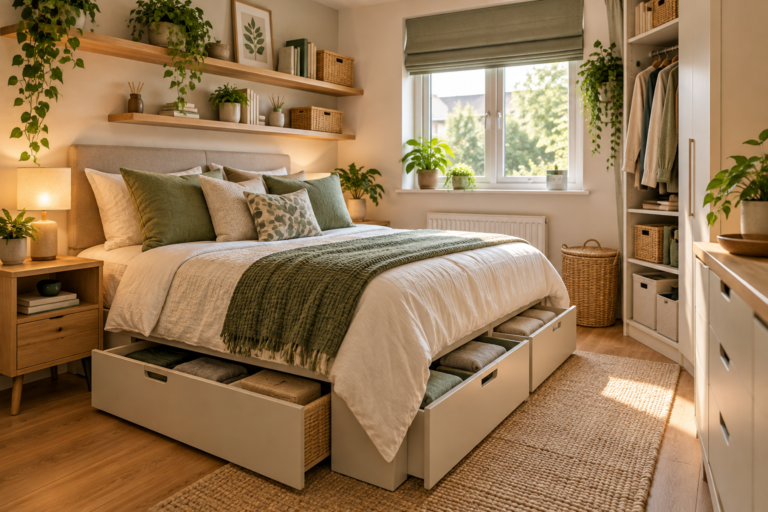
This can be particularly useful when your office shares space with a bedroom or living area. If you work in a bedroom, our guide to organising the bedroom with what you already have can help keep other belongings out of the workspace. Being able to visually “close” the workspace helps the room return to being part of your home rather than feeling like you’re permanently sitting at work.
A small office doesn’t have to feel cramped
Making a small home office work well isn’t about fitting as much storage as possible into the room.
Start by removing what you don’t need, keep the main working area clear and then make thoughtful use of walls, corners and overlooked spaces. Deal with paperwork and cables before they become clutter, and create simple systems that are easy to maintain.
Once you’ve done that, you may find you need far less additional storage than you expected.
And if you do decide you need something new, you’ll have a much better idea of exactly what you’re looking for — and where it’s going to fit.
A useful next step