How to Make a Small Bedroom Feel Cosier Without Adding Clutter
A small bedroom should feel like somewhere you can relax and unwind at the end of the day. But when space is limited, it's easy to think that making the room feel cosier means adding more cushions, decorations or furniture.
The good news is that creating a warm, welcoming bedroom doesn't have to involve buying lots of new things.
Often, the biggest improvements come from simple changes to what you already have. Softer lighting, comfortable textures, a coordinated colour scheme and a little thoughtful organisation can all make a noticeable difference.
And in a smaller room, knowing what not to add can be just as important.
In this guide, we'll explore practical, affordable ways to make your bedroom feel cosier without sacrificing valuable space. We'll also look at a few carefully chosen accessories that could help, if you don't already have something suitable.
Affiliate disclosure: This article contains affiliate links. As an Amazon Associate, Cleverly Sorted earns from qualifying purchases, at no extra cost to you.
1. Choose a Warm, Coordinated Colour Palette
Colour plays an important role in how comfortable and inviting a bedroom feels. In a smaller space, a carefully chosen colour scheme can help create a calm, welcoming atmosphere without needing to add more furniture or accessories.
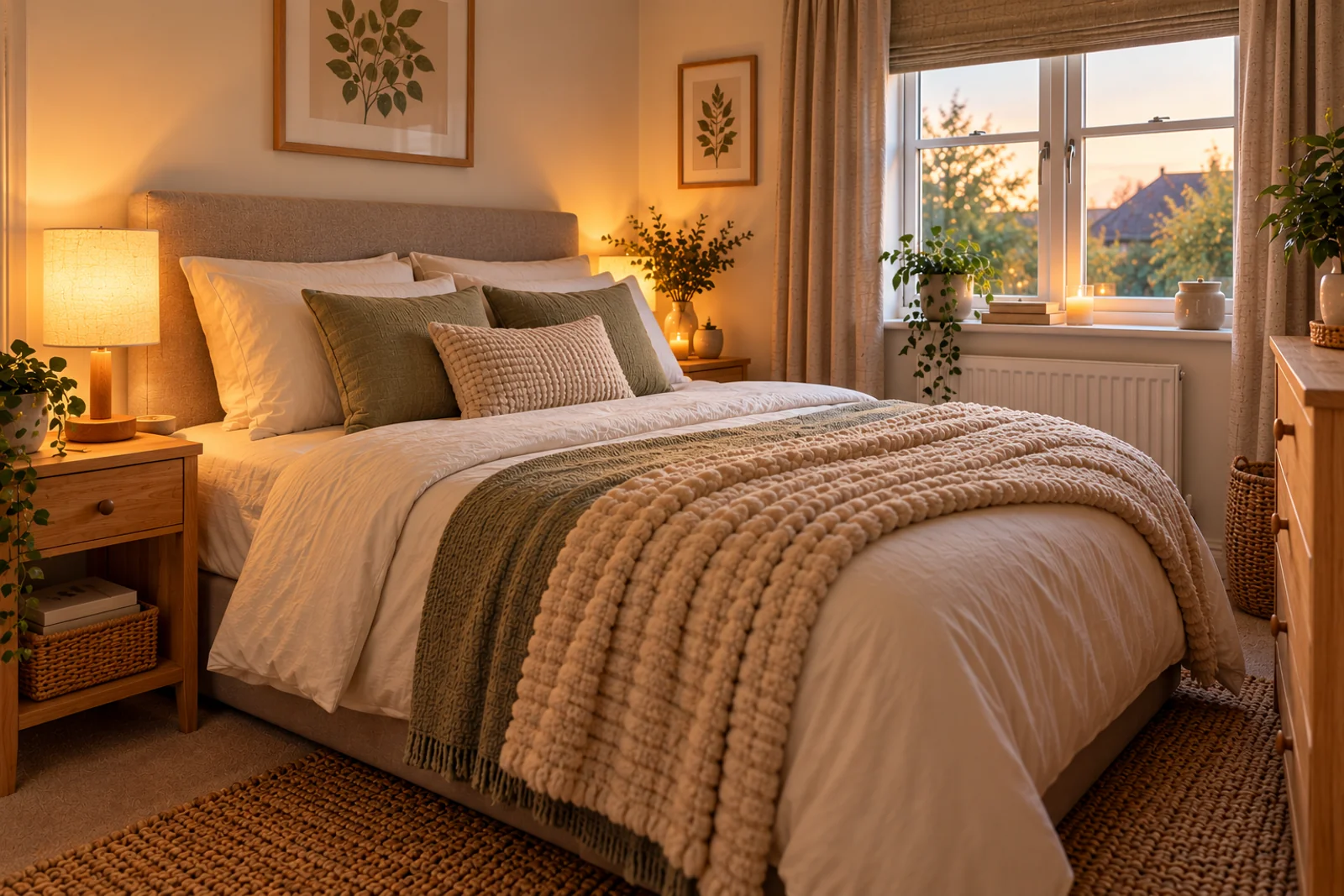
Warm neutrals such as cream, oatmeal, beige and soft taupe are particularly effective for creating a cosy feel. They work well with natural wood furniture and can be complemented by muted colours such as sage green, dusty rose or earthy terracotta.
You don't necessarily need to redecorate the entire room to achieve this. Start by looking at what you already have. Your bedding, curtains, cushions and existing furniture can provide the foundation for a coordinated colour palette.
For example, cream bedding paired with a sage green accent and a soft beige throw can introduce warmth and interest without making the room feel overly busy.
Try to limit your main colour scheme to two or three complementary shades. Too many competing colours and bold patterns can make a small bedroom feel visually crowded, particularly when there are several pieces of furniture in close proximity.
If you enjoy patterned bedding or curtains, consider keeping the surrounding accessories relatively simple. This allows your favourite pieces to stand out without overwhelming the room.
Cleverly Sorted tip: Before buying anything new, experiment with rearranging the colours and accessories you already own. Sometimes moving a cushion, swapping a throw or changing the position of a lamp is enough to give the bedroom a fresh, more coordinated appearance.
2. Make Your Bedside Lighting Softer
Lighting can make a surprisingly big difference to how cosy a bedroom feels, especially during the evenings.
Bright ceiling lights are useful when you're getting dressed or cleaning, but they can feel a little harsh when you're trying to relax before bed.
A smaller bedside lamp can create a softer, more welcoming atmosphere without requiring any changes to your furniture or room layout.
Warm-white lighting is particularly effective for creating a comfortable feel. Rather than illuminating the entire bedroom, a bedside lamp provides a more localised source of light that's useful for reading, winding down or simply enjoying a quieter atmosphere.
If space is limited, look for a compact lamp with adjustable brightness. This gives you more flexibility without needing several different light sources.
A Compact Bedside Lamp Worth Considering
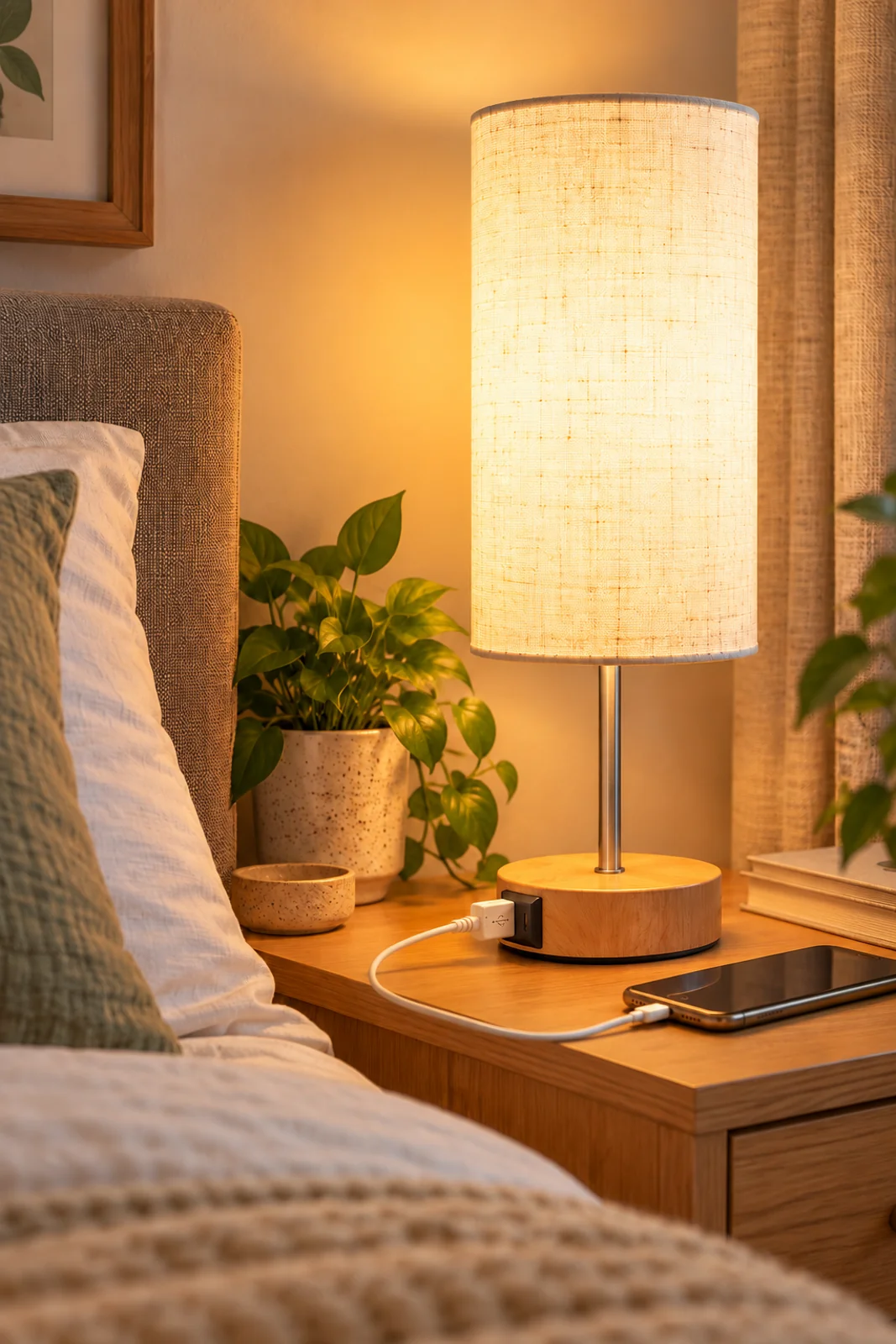
UPXNBOR Bedside Table Lamp with Linen Shade and USB Charging Ports
The UPXNBOR bedside lamp combines warm lighting with a compact, practical design, making it an option worth considering for smaller bedrooms.
Its cylindrical linen shade helps diffuse the light, while the wood-effect base introduces a natural finish that works particularly well with neutral bedroom colour schemes.
One of its most useful features is the three-way touch dimming. Simply touch the base or metal stem to switch between three brightness levels:
- 35% brightness: Softer lighting for relaxing in the evening.
- 70% brightness: A brighter setting that may be useful for reading.
- 100% brightness: Full illumination when you need more light.
The lamp also comes with an E27 warm-white 3000K dimmable LED bulb, so there's no need to purchase a separate bulb to get started.
Another practical feature is the inclusion of USB-A and USB-C charging ports in the base. These allow you to charge compatible devices beside the bed without needing separate USB mains adapters.
According to the product listing, the USB charging ports can operate independently of the light, provided the main power switch on the cable is turned on.
At approximately 34 cm tall, with a shade around 12 cm wide, the lamp has a relatively small footprint, which could make it suitable for a compact bedside table.
It's worth remembering that this is a mains-powered lamp, so you'll need a nearby socket and enough room to position its cable safely.
Why we like the idea: A bedside lamp that combines adjustable warm lighting with convenient charging can help make a small bedroom feel more comfortable while keeping everyday essentials together.
Cleverly Sorted tip: Before buying a new lamp, check whether your existing bedside lighting could be improved with a suitable warm-white bulb. You may be able to achieve a cosier atmosphere without replacing the lamp itself.
3. Add Texture Without Piling on Extra Bedding
One of the simplest ways to make a bedroom feel cosier is to introduce a little texture.
Soft fabrics can make a bed look warmer and more inviting, even when the overall colour scheme remains neutral. A smooth duvet cover, a textured throw and one or two comfortable cushions can work together to create a welcoming appearance without making the room feel overcrowded.
The important thing is to avoid overdoing it.
A bed covered in decorative cushions and multiple blankets might look appealing in a photograph, but having to remove everything before going to sleep isn't particularly practical.
Instead, try adding just one contrasting texture to your existing bedding.
For example, a softly textured fleece throw folded across the foot of the bed can introduce depth and visual interest while keeping the arrangement simple.
A Soft, Textured Throw Worth Considering
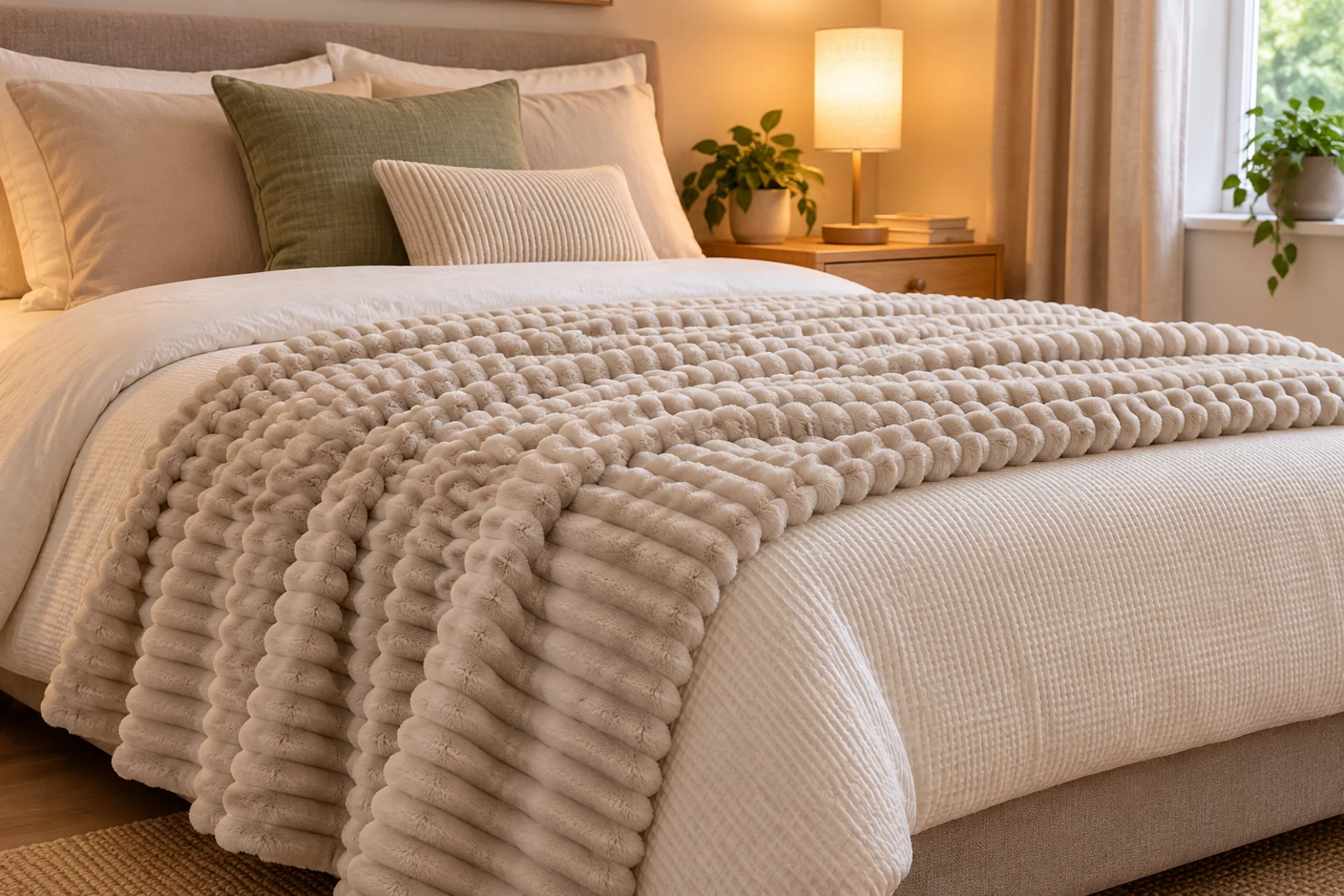
BEDELITE Fluffy Fleece Blanket — Linen Beige, 127 × 152 cm
The BEDELITE fleece throw is a good example of how a single accessory can make existing bedding look softer and more inviting.
Its most noticeable feature is the raised, striped texture, which creates a cosy, three-dimensional appearance without relying on bold colours or patterns.
The linen-beige shade works particularly well with cream, white, oatmeal and other warm neutral bedding. It could also complement muted sage green or natural wooden furniture.
According to the manufacturer, the throw is made from 100% microfibre polyester fleece, with a 300 GSM fabric weight and double-sided construction.
At 127 × 152 cm, it's a useful size for folding across the foot of a bed, draping over a bedroom chair or keeping nearby for relaxing.
The manufacturer also describes it as machine washable, which is helpful for an accessory intended for regular use.
It's worth noting that this is a throw-sized blanket rather than a full-size replacement for a double-bed duvet or blanket.
Why we like the idea: The raised fleece texture can introduce a softer, more layered appearance to a bedroom without taking up additional floor space. Its neutral colour also makes it easy to coordinate with existing bedding.
Cleverly Sorted tip: Before buying a new throw, see whether you already have a suitable blanket tucked away in a cupboard. Folding it neatly across the foot of the bed might be all you need to make the room feel a little cosier.
4. Refresh Your Existing Cushions Instead of Adding More
Cushions can make a bedroom feel softer and more inviting, but it's easy to end up with more than you actually need.
In a small bedroom, too many decorative cushions can quickly become inconvenient. They take up space on the bed during the day and often end up piled on a chair or the floor at night.
A more practical approach is to refresh the cushions you already own.
Changing the covers can introduce a different colour or texture without increasing the number of items in your bedroom. It's also an easy way to coordinate your cushions with existing bedding, curtains or a favourite throw.
For a calm, cosy appearance, consider neutral colours and subtle textures rather than several competing patterns.
A Simple Cushion-Cover Refresh Worth Considering
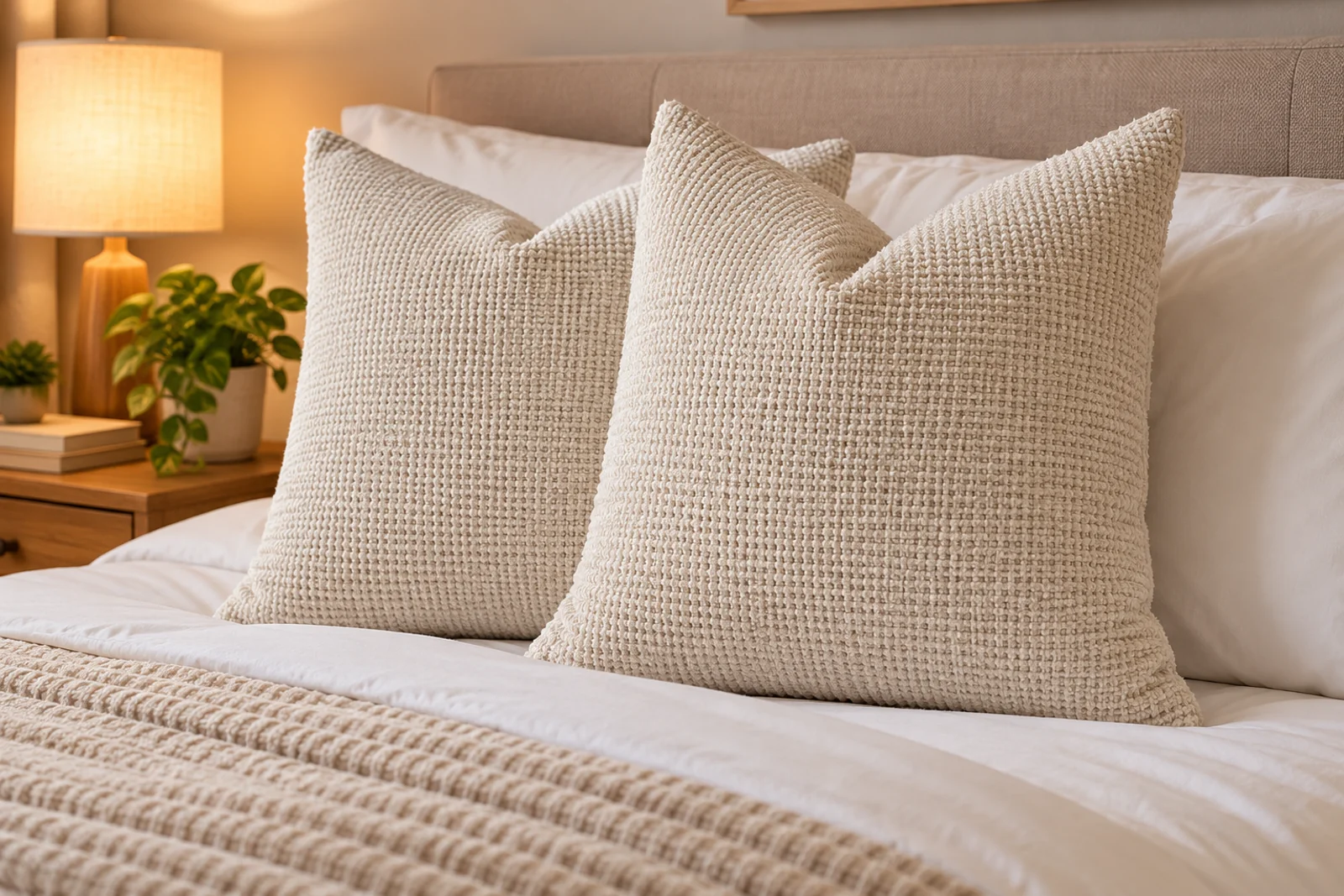
ZWJD Soft Chenille Cushion Covers — Beige, Pack of Two, 45 × 45 cm
These ZWJD cushion covers offer a straightforward way to refresh existing cushions while keeping the overall bedroom arrangement simple.
The beige fabric has a subtle chenille texture that adds softness and visual interest without relying on bold patterns or decorative embellishments.
Each pack contains two 45 × 45 cm covers, making them suitable for refreshing a matching pair of cushions.
Their neutral shade would work particularly well with cream bedding, natural wooden furniture and the linen-beige fleece throw featured earlier in this guide.
According to the manufacturer, the covers are made from soft chenille fabric and feature concealed zip closures for a neat finish.
They're also described as machine washable, which is useful for accessories that may need regular cleaning.
Before buying: These are cushion covers rather than complete cushions, so check that you already have suitable 45 × 45 cm inserts. There's little benefit in buying additional cushions if your aim is to keep the bedroom clutter-free.
Why we like the idea: Changing the covers on cushions you already own can introduce a fresh colour and texture without adding more belongings to a small bedroom.
Cleverly Sorted tip: You don't need a large collection of decorative cushions to create a cosy bed. One or two well-chosen cushions, coordinated with your existing bedding, can be enough to make the room feel comfortable and inviting.
5. Keep Your Bedside Table Simple
Your bedside table might be one of the smallest pieces of furniture in the bedroom, but it can have a surprisingly big impact on how tidy and relaxing the room feels.
It's easy for everyday items to accumulate: phone chargers, books, glasses, hand cream, jewellery and all those little things we put down before going to sleep.
In a small bedroom, even a modest amount of clutter can make the space feel busier than it really is.
The solution isn't necessarily to buy more storage. Instead, think about which items you genuinely need within reach of your bed.
Keep Only the Essentials on Display
Try limiting your bedside surface to three or four useful items, such as:
- A bedside lamp.
- Your current book.
- A glass of water.
- Your phone or alarm clock.
If you have a bedside drawer, use it for smaller accessories that don't need to remain visible.
A small dish you already own can also be useful for keeping everyday jewellery or other tiny essentials together.
Tidy Up Charging Cables
Loose charging cables can make an otherwise organised bedside table look untidy.
Where possible, route cables neatly behind the furniture, keeping them away from moving drawers, sharp edges and areas where they might become trapped or damaged.
If your bedside lamp has built-in USB charging ports, as with the UPXNBOR lamp mentioned earlier, these may also help keep charging accessories together.
Avoid running cables beneath pillows or bedding, and make sure charging devices have adequate ventilation.
Leave a Little Empty Space
Not every part of your bedside table needs to be occupied.
Leaving some clear surface space makes it easier to put down a book or glass of water and helps the area feel less crowded.
Cleverly Sorted tip: Spend two minutes clearing your bedside table before going to bed. It's a small habit that can help you wake up to a calmer, more organised space.
6. Make Better Use of the Furniture You Already Have
When a small bedroom feels cramped or uncomfortable, it's tempting to think that buying different furniture will solve the problem.
But sometimes, simply changing how you use or arrange what you already own can make the room feel more spacious and inviting.
Before spending money on new furniture, take a fresh look at your bedroom layout.
Give Yourself Room to Move
Start by looking at the space around your bed.
Can you comfortably reach your wardrobe, open drawers and move around the room without squeezing past furniture?
If a bedside table, chair or chest of drawers is making everyday movement awkward, consider whether it could be repositioned.
Even a small adjustment can improve how practical the room feels.
Try to keep the main route between the bedroom door, bed and wardrobe clear, rather than allowing furniture or belongings to obstruct it.
Think About How You Use Each Piece of Furniture
Every item of furniture in a small bedroom should ideally serve a useful purpose.
For example, a bedroom chair might look attractive, but if it has become a permanent home for clothes, it may be contributing more clutter than comfort.
Similarly, a decorative table or shelving unit might be taking up valuable floor space without providing much practical benefit.
Ask yourself whether each piece of furniture makes the bedroom more comfortable, more useful or simply more crowded.
You don't necessarily need to remove anything immediately. Try rearranging the room first and see whether the space works better.
Make Existing Storage Work Harder
If your bedroom has built-in wardrobes, drawers or under-bed storage, make sure you're using them effectively before adding extra storage furniture.
Keeping everyday essentials easy to reach and less frequently used belongings neatly stored can help reduce visible clutter.
However, avoid filling every available space simply because it's empty. Leaving a little breathing room can make the bedroom feel more relaxed and easier to maintain.
For more practical ideas, take a look at our guide to 10 Clever Storage Ideas for a Small Bedroom, where we explore ways to organise belongings when space is limited.
Cleverly Sorted tip: Before buying new bedroom furniture, try living with a slightly different layout for a few days. You may discover that a simple rearrangement makes the room feel more comfortable without costing anything.
7. Let Curtains and Natural Light Do Some of the Work
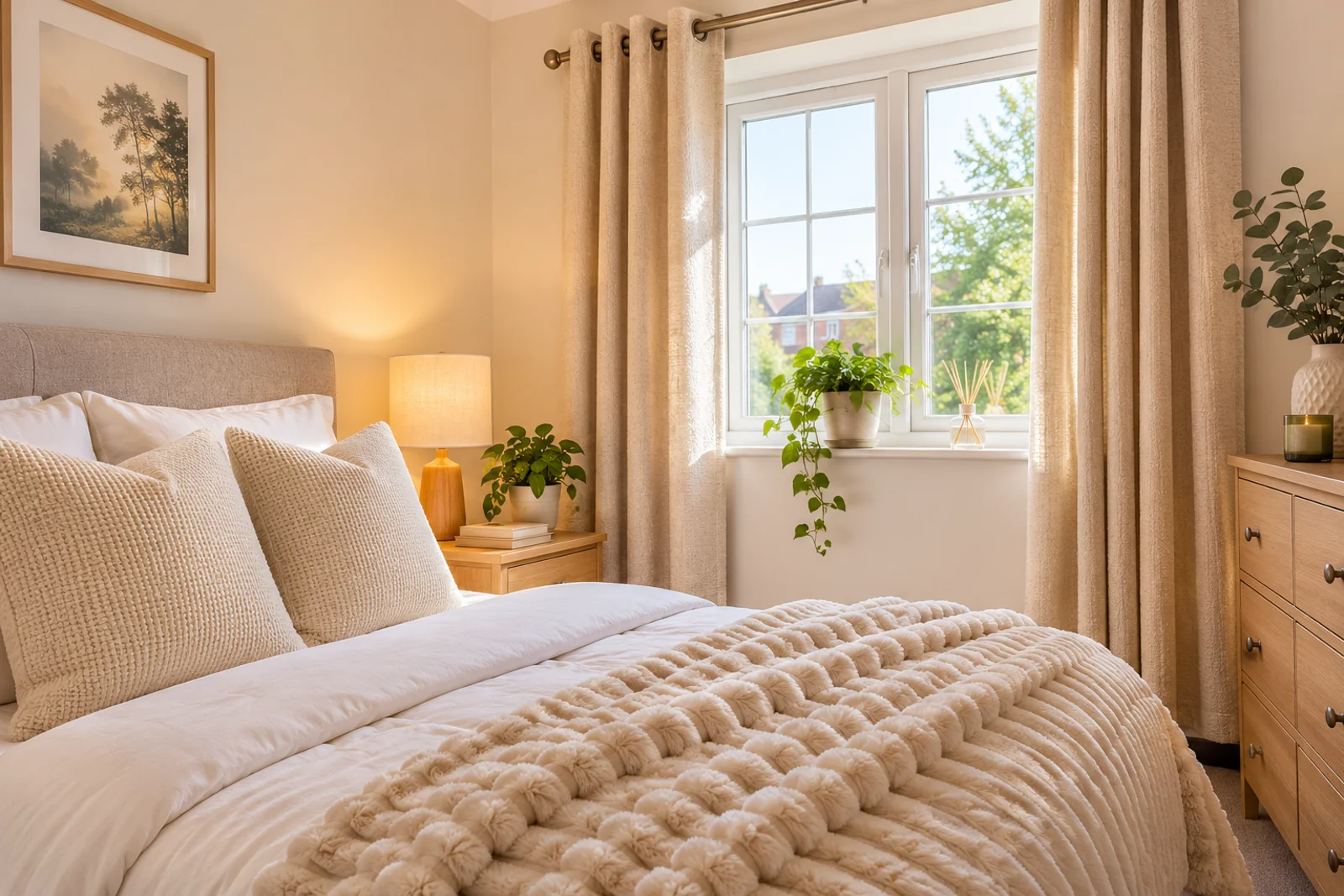
Windows can have a surprisingly big influence on how comfortable a bedroom feels.
During the day, natural light can make a small room feel brighter and more open. In the evening, closing the curtains and switching to softer lighting can help create a warm, relaxing atmosphere.
You don't necessarily need new curtains or expensive window treatments to make a difference. Sometimes, it's simply a matter of making better use of what you already have.
Make the Most of Daylight
Start by looking at how much natural light enters your bedroom.
If possible, open your curtains fully during the day and avoid placing unnecessary decorations or bulky furniture directly in front of the window.
A crowded windowsill can make a small room feel busier, so try keeping it relatively clear.
If your bedroom doesn't receive much daylight, lighter-coloured bedding and curtains can help reflect the available light around the room.
A mirror positioned to reflect daylight can also help brighten darker areas, provided it doesn't create uncomfortable glare.
Use Curtains to Create a Softer Atmosphere
Curtains do more than provide privacy.
Their colour, texture and the way they frame a window can make a bedroom feel warmer and more finished.
Simple fabric curtains in cream, oatmeal or warm beige can work particularly well with neutral bedding and natural wooden furniture.
You don't need elaborate patterns or heavy decorative layers. In a smaller bedroom, a straightforward curtain design often looks more balanced.
If you already have curtains that work well, there's no need to replace them simply for decorative reasons.
Instead, consider whether they're hanging neatly, opening fully and allowing you to make the most of the available daylight.
Create a Comfortable Evening Atmosphere
As daylight fades, the combination of closed curtains and warm bedside lighting can make a bedroom feel particularly cosy.
This is where the softer lighting discussed earlier can make a difference.
Rather than relying entirely on a bright ceiling light, try using a bedside lamp while you're reading or winding down.
The contrast between gentle lighting and soft furnishings can create a welcoming atmosphere without introducing any additional clutter.
Cleverly Sorted tip: If your bedroom feels a little cold or uninviting, try adjusting the curtains and lighting before buying new decorations. Small changes to how light enters and fills the room can make a noticeable difference.
8. Finish With Just One or Two Personal Touches
A cosy bedroom shouldn't feel like a showroom. It's the little personal details that can make a space feel welcoming and genuinely yours.
However, in a small bedroom, it's easy for decorative accessories to accumulate until every shelf, windowsill and bedside table feels crowded.
The trick is to choose a few meaningful items rather than trying to decorate every available surface.
Choose Things That Make You Feel at Home
A favourite framed photograph, a small piece of artwork or a book you enjoy can make a bedroom feel more personal without taking up much room.
You might already have decorations elsewhere in your home that would work beautifully in the bedroom.
Rather than buying something new, try moving an existing accessory into the room and seeing how it changes the atmosphere.
A framed print above the bed, for example, can add character without using any valuable bedside or floor space. Just make sure it's securely fixed and safely positioned.
Group Small Accessories Together
Several small objects scattered across different surfaces can make a bedroom feel busier than it needs to.
Try grouping a couple of meaningful accessories together on a chest of drawers or shelf.
For example, a favourite photograph beside a small ceramic dish can create a simple, attractive arrangement.
Keeping similar items together also makes surfaces easier to clean and maintain.
Don't Be Afraid of Empty Space
One of the easiest ways to make a small bedroom feel calmer is to resist the temptation to fill every corner.
You don't need decorations on every shelf or accessories covering every surface.
A little empty space helps the room feel more balanced and allows the items you genuinely like to stand out.
The same principle applies to your bed. A neatly made duvet, a comfortable throw and one or two cushions can look just as inviting as a much more elaborate arrangement.
Cleverly Sorted tip: Before adding another decoration, try removing one or two items from the room. Sometimes creating a cosier atmosphere is more about simplifying what you already have than introducing something new.
A Cosier Bedroom Doesn't Have to Mean More Stuff
Making a small bedroom feel cosy isn't about filling it with cushions, decorations or expensive new furniture. Often, the most effective changes are also the simplest.
Softer lighting can make evenings feel more relaxing, while a coordinated colour scheme and a few comfortable textures can help create a warmer, more welcoming atmosphere.
Keeping your bedside table organised, making better use of existing furniture and allowing natural light into the room can also make a noticeable difference.
The important thing is to find a balance between comfort and practicality.
You don't need to follow every decorating trend or replace things that already work perfectly well. Start with what you have, make one or two small improvements and see how the room feels.
If you do decide to buy something new, choose an item that serves a genuine purpose, whether that's a bedside lamp with adjustable lighting, a soft throw or replacement covers for cushions you already own.
Above all, remember that a cosy bedroom should be somewhere you enjoy spending time, not another space that requires constant tidying.
A few thoughtful changes can make even the smallest bedroom feel warmer, calmer and more inviting — without adding unnecessary clutter.